

Big colours attract! Birds, bees and butterflies are drawn in by vibrant flowers coloured in pinks, yellows, blues, and greens, whilst eye-popping coloured lollies might bring you to your knees! But bright, bold colours don’t always mean something good.
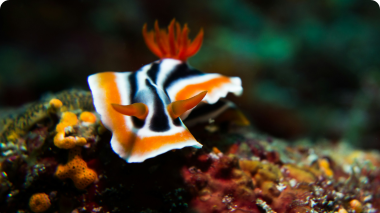
Just as we often use the colour red to signal danger, animals too can use bold colours to warn predators not to attack. One expert of this colourful defensive strategy is sea slugs, called nudibranchs, that glide along their bellies over rocks and corals under the sea.
Multi-coloured wonder!
Unlike the dull-brown, sticky, icky slugs hiding in your garden, sea slugs are a multicoloured marvel of spots, stripes and shimmering frills — and some that even look like Pikachu! Yet weirdly, these animals don’t have any eyes. They can’t see how they look, but their predators can.
Sea slugs are small animals with gummy-soft bodies, but are protected by their eye-catching coloured patterns. Do you remember the colour of your least favourite foods? Bold colours stick in your mind, especially if it’s associated with something that makes you go eww! This is how sea slug colours work.
Their amazing rainbow-coloured designs are to warn fearsome fish or curious crabs of the toxic, yucky-tasting chemicals they store within. Just as you might try to avoid eating your greens, predatory animals avoid brightly patterned sea slugs!
But why do they come in so many different colours? Sea slug expert Cedric, a scientist who SCUBA dives underwater, photographing these marvellous molluscs, says “it's complicated!” But one reason is to do with their toxic chemical defences. The more dangerous the sea slug’s toxins, the bolder its colourful patterns are.1
Colour vs camouflage
Sea slugs stand out, so it’s easier for predators to recognise and avoid them. Unlike camouflaged animals trying to blend into the background, sea slugs can safely explore diverse, coloured habitats. Including tingly-pink corals to squidgy-green seaweeds or crusty-grey rocks, where tasty new foods and cosy hideouts await.2
But, standing out is also risky. Bright colours can attract less wise predators, who haven’t yet learnt of sea slugs’ dangerous toxins. Is it possible to be both camouflaged and stand out? For sea slugs, it is!
Viewed up close, sea slugs appear bold and bright. But from further away, their clever, colourful designs become a camouflaged disguise, that passes even hungry fish by.
Do you see what I see?
Sea slugs’ coloured patterns look so incredible, it’s hard to imagine they signal something bad. But different animals don’t all see in the same way. Fish can see some colours better than us and others colours worse, whilst crabs mostly see in black and white.
Sea slug designs have evolved over many years for the eyes of their predators. Their coloured patterns are like a visual language only understood by those within their underwater world.
Cedric says one of the most exciting parts of studying sea slugs is trying to decode this mysterious language of colours, “as though they were aliens from outer space.”